Family weekend
The Day We Let the Kids Lead
A family Saturday at Gilroy Gardens, where imperfect plans, gentle rides, strange trees, and one unnecessary pinwheel became the parts worth remembering.
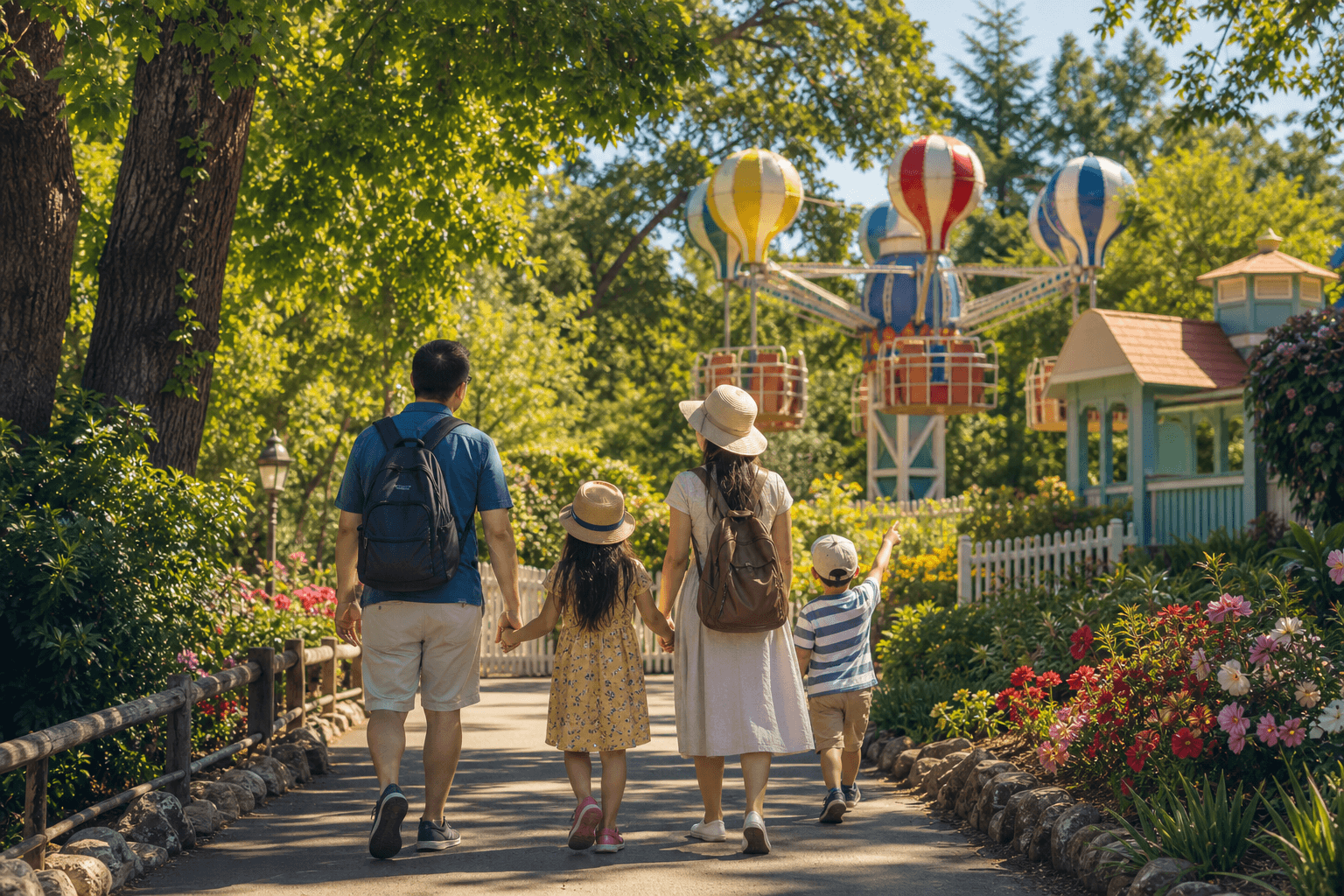
The plan for Saturday was simple enough: leave early, spend the day at Gilroy Gardens, and come home before everyone became too tired to enjoy being together.
Like most family plans, it began slipping almost immediately.
One water bottle was missing. The sunscreen was in the wrong bag. Somebody wanted to bring a jacket, somebody else insisted nobody would need one, and the snacks that had seemed generous on the kitchen counter suddenly looked inadequate once they were packed. We stood by the door doing the familiar inventory: hats, phones, tickets, wipes, extra shirts, fruit, patience.
Patience was the only thing we could not confirm.
Still, we got into the car. The morning was bright, the road south opened ahead of us, and after a while the small household negotiations gave way to the easy anticipation of going somewhere made for fun.
Gilroy Gardens is not the kind of theme park that appears all at once. It reveals itself through trees. The paths curve beneath old branches. Flowers soften the edges of ride fences. You hear a bell, a splash, or the quick rise of children's voices before you see what has caused it. Even the rides seem to have grown into the landscape rather than being dropped on top of it.
At the entrance, we made one decision that quietly improved the entire day: the children would choose where to go first.
This was not efficient. It was, however, wonderful.
The First Choice
Adults enter a theme park with maps in their heads. We notice distance, wait times, meal schedules, shade, and the possibility of regretting a decision two hours later. Children notice color.
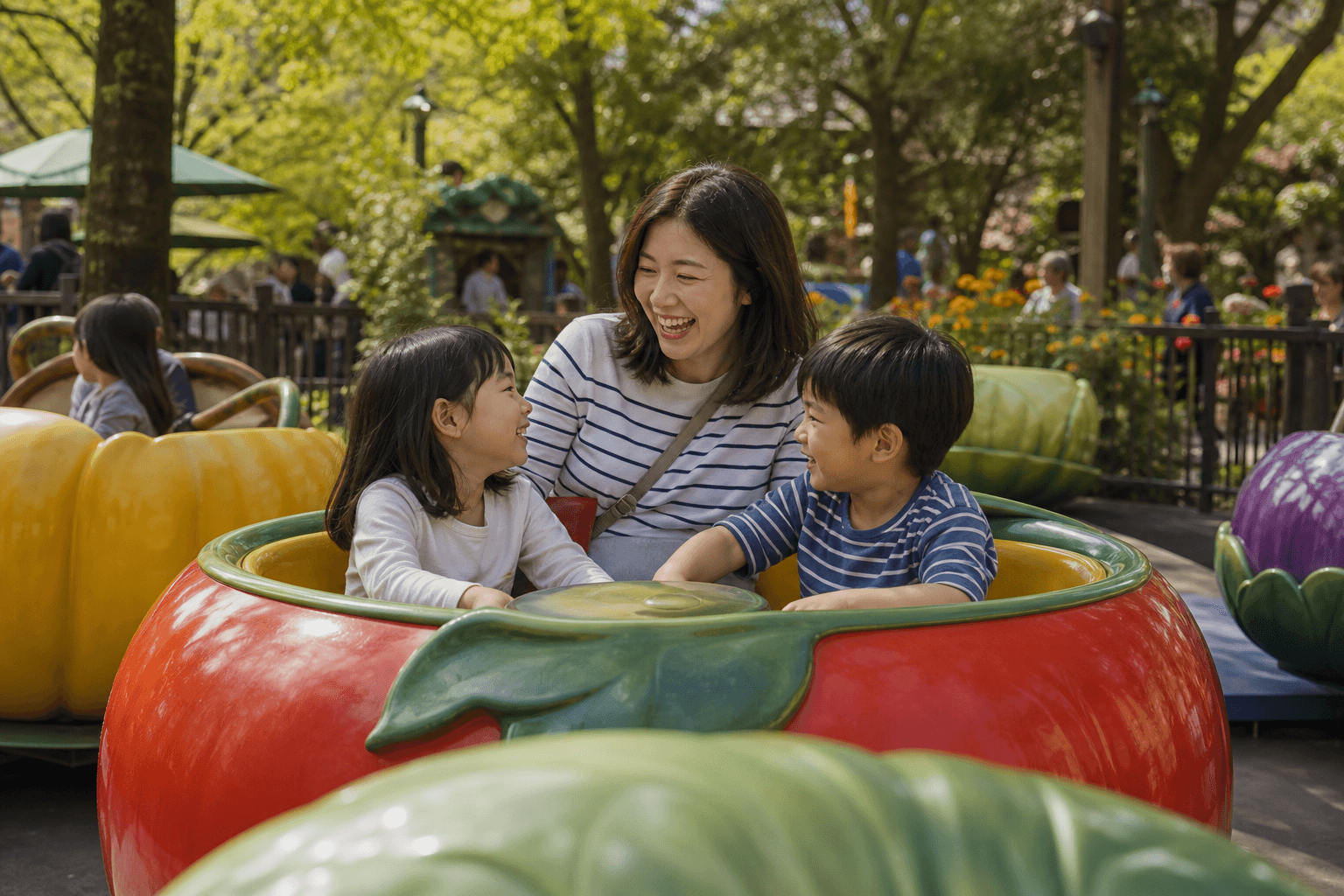
The first ride they chose was not the biggest or fastest. It was simply the one with bright garden shapes turning cheerfully in the morning light. They ran toward it with the certainty of people who had never heard the phrase "optimal route."
We followed.
There is a particular expression children make just before a ride begins. They are delighted, but they are also checking the adults. Is this safe? Are you coming too? Are we allowed to be this excited?
Then the ride moved, and the questions disappeared.
We turned in a wide circle beneath the trees. The children laughed each time our car came around toward the family members waiting by the fence. We waved as though we had been gone for hours instead of twenty seconds. On the next turn we waved again. By the fourth pass, everyone was laughing at the seriousness with which we continued the greeting.
Nothing about the ride was frightening. That was part of its charm. It did not ask anyone to be brave. It only asked us to sit close, hold the bar, and enjoy going around together.
When it stopped, the children stepped off with the satisfied authority of experienced travelers. They had chosen correctly. The day belonged to them now.
A Park That Makes Room for Looking
Between rides, we walked through gardens.
This sounds like a pause in the story, but it became one of the best parts. Theme parks usually train the eye to search for what comes next: the next attraction, the next line, the next snack stand. At Gilroy Gardens, the trees keep interrupting that urgency.
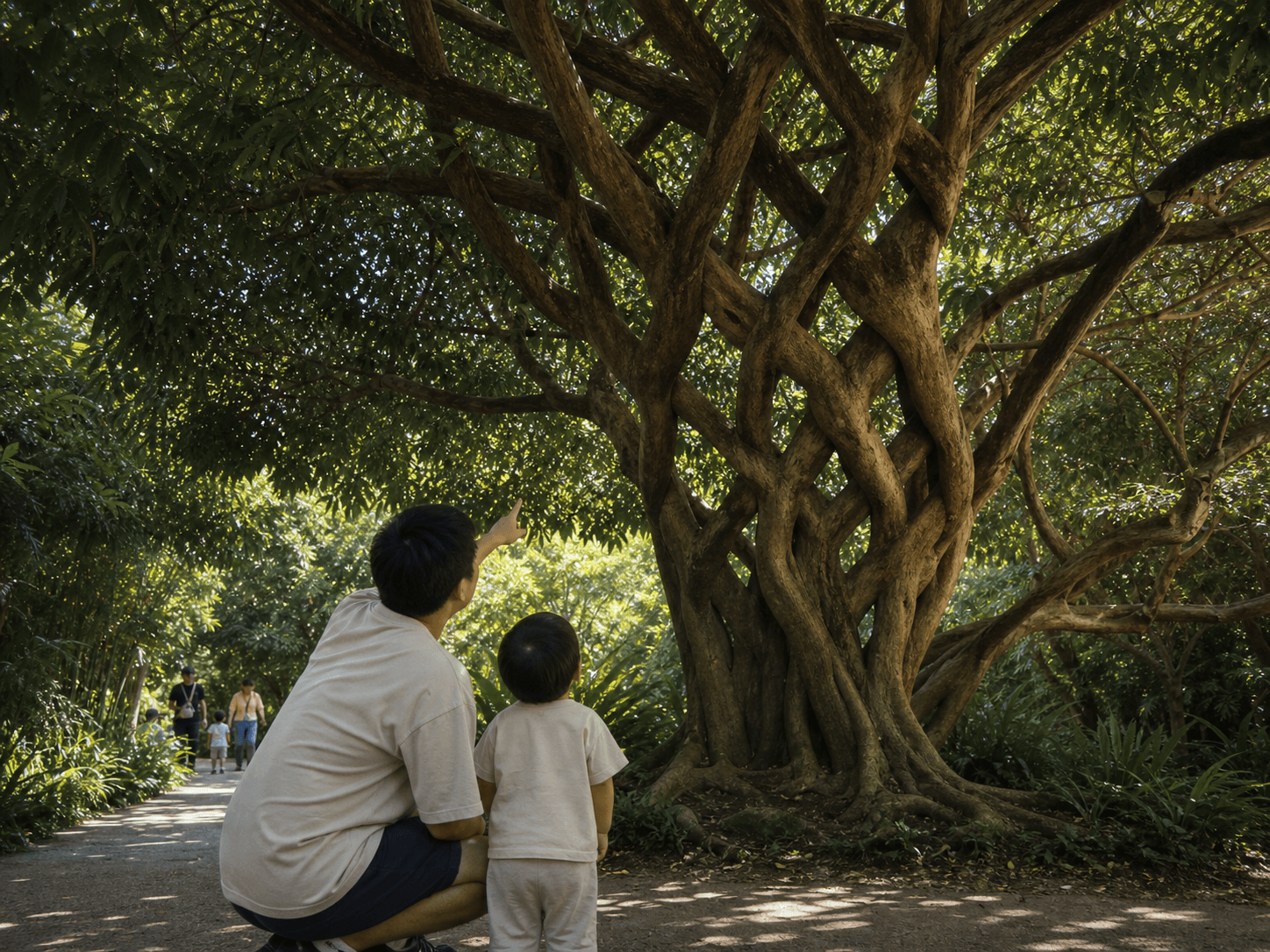
The Circus Trees are especially good at it. Their trunks twist, braid, loop, and divide in ways that look impossible until you stand close enough to see bark continuing through every turn. They are living sculptures, patiently shaped over years, and they make everyone slow down.
One child asked whether the trees had grown that way by themselves.
We explained that someone had carefully trained them when they were young.
"Did it hurt?" came the next question.
We did not know exactly how to answer. We talked about branches being guided gradually, about patience, and about how living things can take surprising shapes when they are cared for over time. It was not a perfect explanation, but it held us there for a while.
A theme park is not where I expected to have a quiet conversation about growing.
That is why I remember it.
We stood under the shade while other families passed. Some children hurried by toward the next ride. Others stopped and looked upward. Adults took photographs, then lowered their phones and looked again with their own eyes.
The trees had no flashing lights. They did not spin. They did not make noise. Still, they held attention in a way few attractions can.
Before moving on, one of the children touched the rough bark lightly and said goodbye.
The Middle of the Day
By noon, the morning's easy cooperation had begun to wear thin.
This is also part of a family outing, though it rarely appears in the photographs. Heat rises. Lines feel longer. Someone becomes hungry before anyone else. A perfectly reasonable suggestion is received as a personal betrayal.
We had reached the part of the day when every decision felt strangely important.
Should we ride first or eat first? Was the shaded table worth walking farther? Did anyone actually want the apple slices that had been packed so carefully? Why had we brought so many napkins and somehow still needed another one?
We chose lunch.
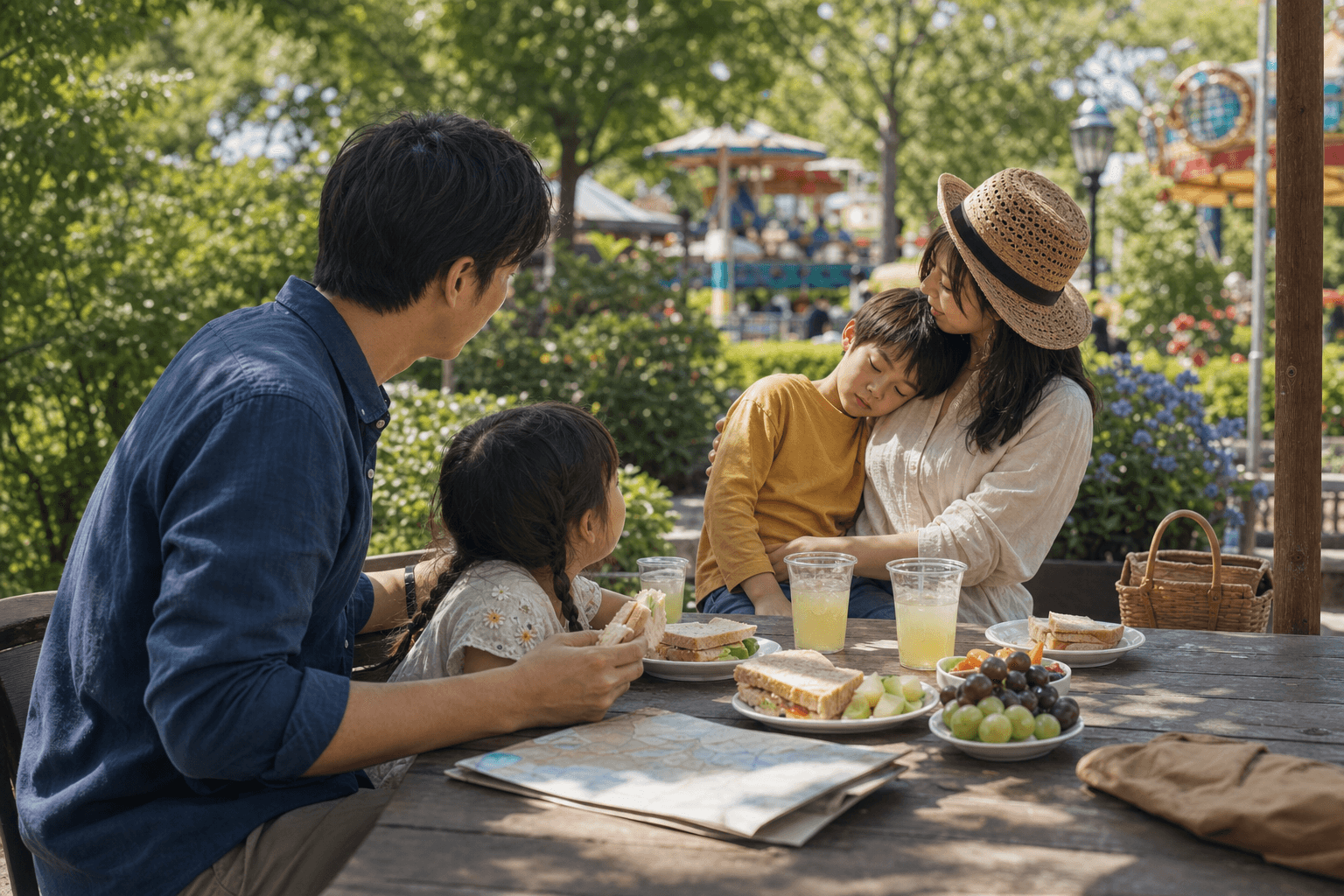
Under a broad patch of shade, the day became manageable again. Sandwiches came out. Fruit disappeared faster than expected. Lemonade was divided with the precision of an international treaty. One child leaned against a parent and announced that they were not tired while looking unmistakably tired.
Nobody discussed the next ride for several minutes.
That silence helped.
Family days often turn on moments like this. Not the big ride or the posed photograph, but the decision to stop before everybody falls apart. A bench. A table. Cold water. The permission to be quiet.
We watched small trains and colorful ride cars pass through gaps in the trees. Somewhere nearby, a bell rang. Families moved along the paths carrying hats, backpacks, stuffed prizes, and the complicated emotional weather of spending a full day together.
We were not the only ones renegotiating the afternoon.
After lunch, we unfolded the map. The children studied it upside down and still seemed more confident than the adults.
They chose again.
A Little Bravery
The next ride was taller.
Not dramatically tall, but tall enough to make one child pause at the entrance. Excitement and uncertainty arrived together. The line moved forward. The child moved with it, then stopped, then moved again.
We said the important thing: it was all right not to go.
Sometimes that sentence makes courage possible. When there is permission to step back, stepping forward becomes a real choice.
The child looked at the ride, then at us, and nodded.
We climbed in together.
As the car rose, the gardens opened below us. Trees became a green roof. Paths appeared between flower beds. The larger rides, so impressive from the ground, became colorful shapes tucked into the landscape. Beyond the park, the hills held the edge of the view.
At the highest point, a small hand found mine.
Then the ride turned downward, and the hand squeezed once before letting go.
When we stepped out, the child did not make a speech about courage. Children rarely narrate their own growth for our convenience. They simply walked faster toward the next thing.
But their shoulders were different.
We noticed.
Letting the Schedule Go
By midafternoon, our original plan had lost all authority.
We had not followed the route we imagined. We had repeated one gentle ride because the children loved it. We had spent longer with the trees than expected. We had stopped for water three times and for no clear reason once. There were areas of the park we would not reach.
The day improved when we stopped trying to recover the schedule.
We let the children choose one more ride. Then another. We stood near the splash area long enough for somebody's shoes to become wetter than intended. We bought a small pinwheel that cost more than a pinwheel should and immediately became precious.
There is a freedom in accepting that a family outing cannot be completed.
You do not conquer a theme park. You move through it until the people you love have gathered enough moments for one day.
Some of those moments are obvious: the ride that makes everyone laugh, the view from above, the photograph where all four faces happen to be looking in roughly the same direction.
Others are quieter.
A parent holding a hat while tying a shoe. A child sharing the last piece of fruit without being asked. Two siblings comparing their favorite rides and discovering they chose the same one. Someone saying thank you for the water bottle that had caused so much trouble in the morning.
These are the details that soften the day when you remember it later.
The Walk Out
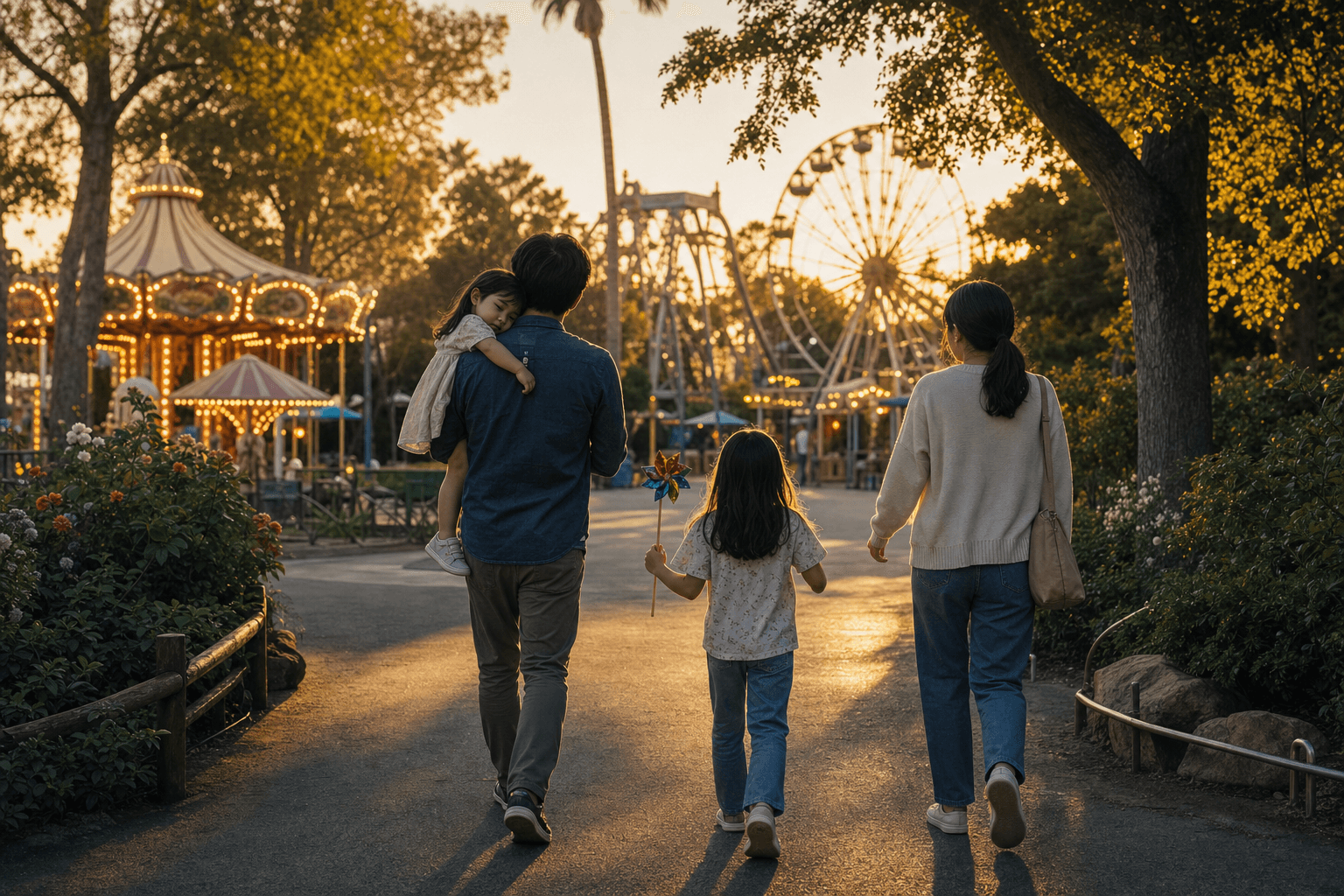
Late afternoon gave the park a different color. The bright heat eased. The paths stretched into longer shadows. Families began moving toward the exit with the slow, uneven pace of people who had used nearly all their energy.
One child still carried the pinwheel. The other had reached the stage of tiredness where walking became a philosophical objection.
We carried them.
There is a weight to a sleepy child that feels entirely different from ordinary weight. Their body trusts yours without negotiation. Their head finds your shoulder. For a few minutes, the child who had spent the whole day racing toward the next thing becomes completely still.
We passed the rides again on the way out. They were still turning, still ringing, still collecting new families for one more round. The children watched over our shoulders.
"Can we come back?" one asked.
It was too soon to make another plan, but not too soon to say yes.
At the car, we performed the final family inventory. Hats: mostly accounted for. Water bottles: present. Pinwheel: protected with surprising seriousness. Sunscreen: somehow still buried in the wrong bag.
The shoes came off before the doors were fully closed.
Within ten minutes, the back seat was quiet.
What the Children Chose
Driving home, I thought about how little of the day would have happened if the adults had insisted on efficiency.
We might have covered more ground. We might have chosen the most popular rides first, eaten exactly on schedule, and completed more of the map.
We would have missed the ride with the repeated waving. We might have hurried past the tree conversation. We might not have seen the small moment of bravery on the taller ride. We certainly would not have bought the unnecessary pinwheel.
Children do not always choose what adults expect to remember.
They choose the bright thing, the ride they already loved, the strange tree, the snack at the wrong time, the long way around because something caught their eye. Their choices can make a day slower and less orderly.
They can also make it more alive.
At home, the park came back with us in pieces. A damp pair of shoes sat by the door. Crumbs collected at the bottom of the bag. The pinwheel leaned in a cup on the kitchen counter, turning whenever the evening air moved through the window.
At dinner, everyone tried to name the best part.
The answers changed.
The ride. The tall view. The tree. The lemonade. Being carried. The moment when everybody waved on every single turn.
There was no final agreement.
That felt right.
A good family day is not one perfect memory. It is a small collection of memories, each person carrying home a different version.
We had left the house hoping to give the children a fun Saturday.
Instead, they showed us how to have one.