A Bay Area story · fictional vignette
The List He Kept
An old grocery list seemed too ordinary to remember his father by. Then a walk to a neighborhood altar changed what he saw in it.
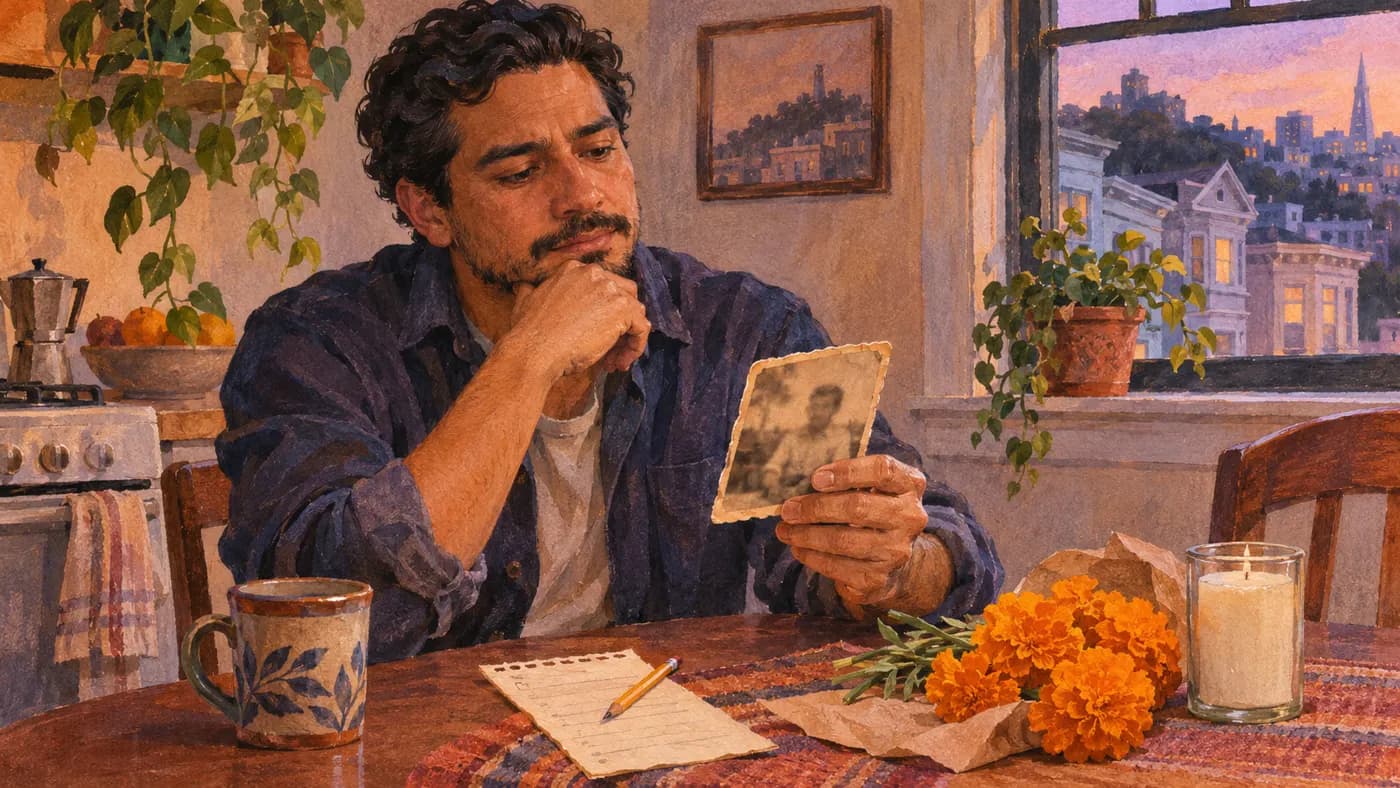
The photograph was easy to choose. In it, his father leaned against the kitchen counter, one hand around a chipped blue mug, looking just past the camera as though someone had called his name. The difficult part was the scrap of paper tucked behind the frame.
It was a grocery list: tomatoes, coffee, dish soap. At the bottom, in his father's cramped handwriting, were the words ‘call the boys.’ He had kept it for six years, and still could not decide whether it was a memory or merely a reminder someone forgot to throw away.
This is a fictional vignette inspired by the community Festival of Altars at Potrero del Sol on November 2, 2026. The festival and the Mission District's Día de los Muertos procession were real; the man, his father, and this private moment are imagined.
What to bring
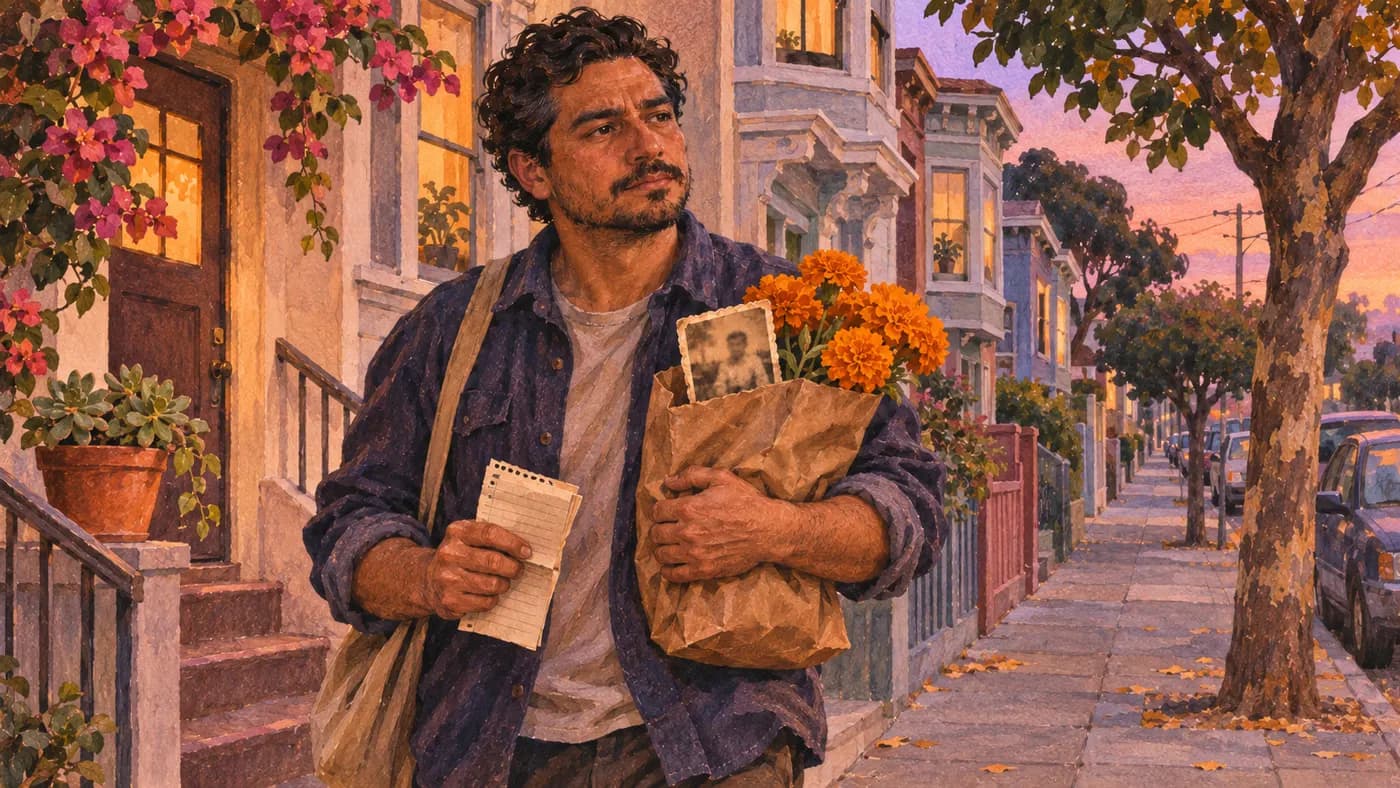
He put the photograph in a small frame and wrapped a few marigolds in brown paper. The list went into his coat pocket. He told himself he could decide about it later.
Outside, the last light held on to the upper windows while the street below had already turned blue. He walked slowly enough to notice a neighbor taking in laundry and a bus sighing at the corner. His father would have stopped to ask whether the neighbor needed a hand. He would have missed the bus doing it.
An ordinary line
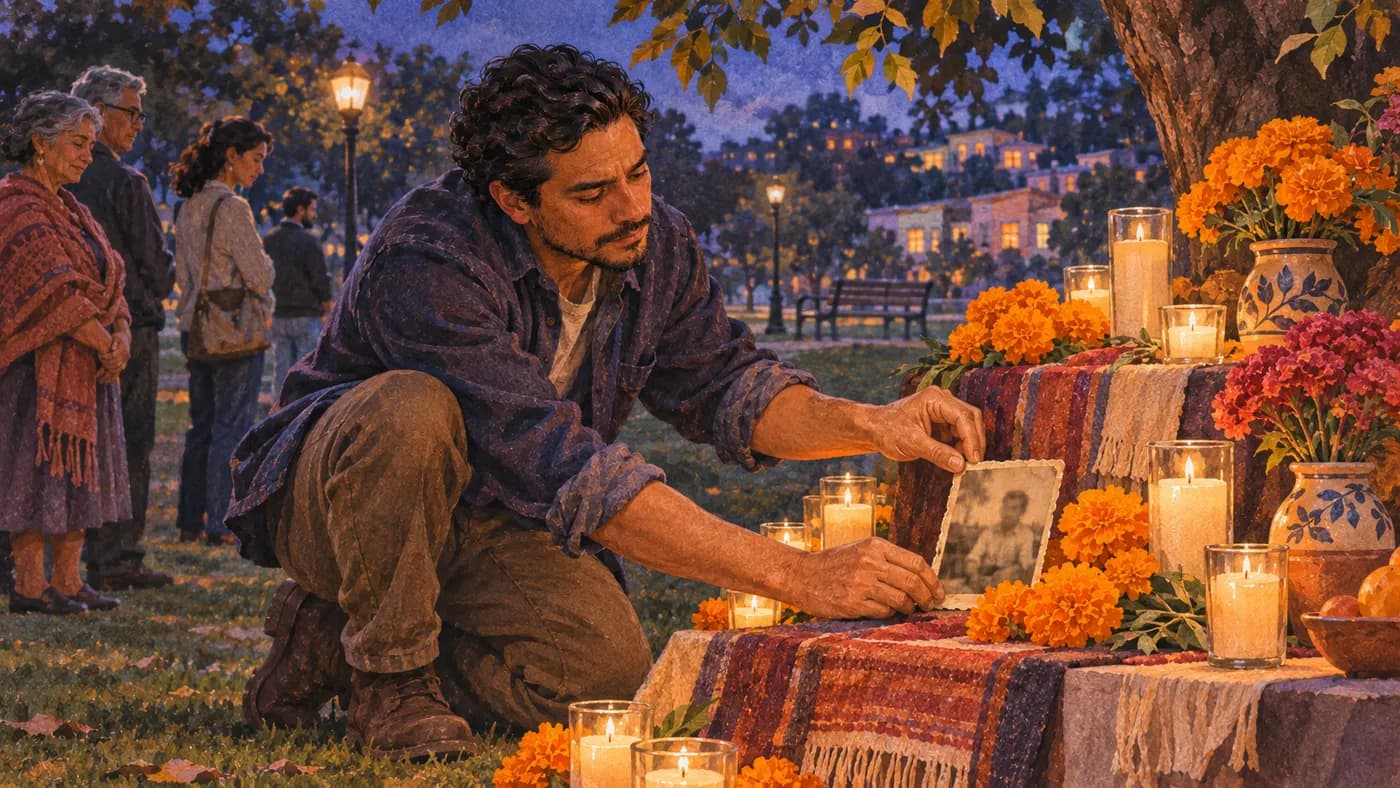
At the park, candles made small pools of light around the community altars. He found a little space, set down the photograph, and laid the flowers beside it. Other people stood nearby with their own stories. He did not know them, and he did not need to.
He unfolded the list. Tomatoes, coffee, dish soap. There was no grand farewell in it. But ‘call the boys’ was there because his father meant to call them, perhaps after putting away the groceries, perhaps before dinner. The words were ordinary because the care behind them had been ordinary too: repeated often enough to become the shape of a life.
After a while he picked up the photograph to take home and left the flowers. The list he folded back into his pocket. Some memories could be shared for an evening; this one still belonged in his hand.
A line added
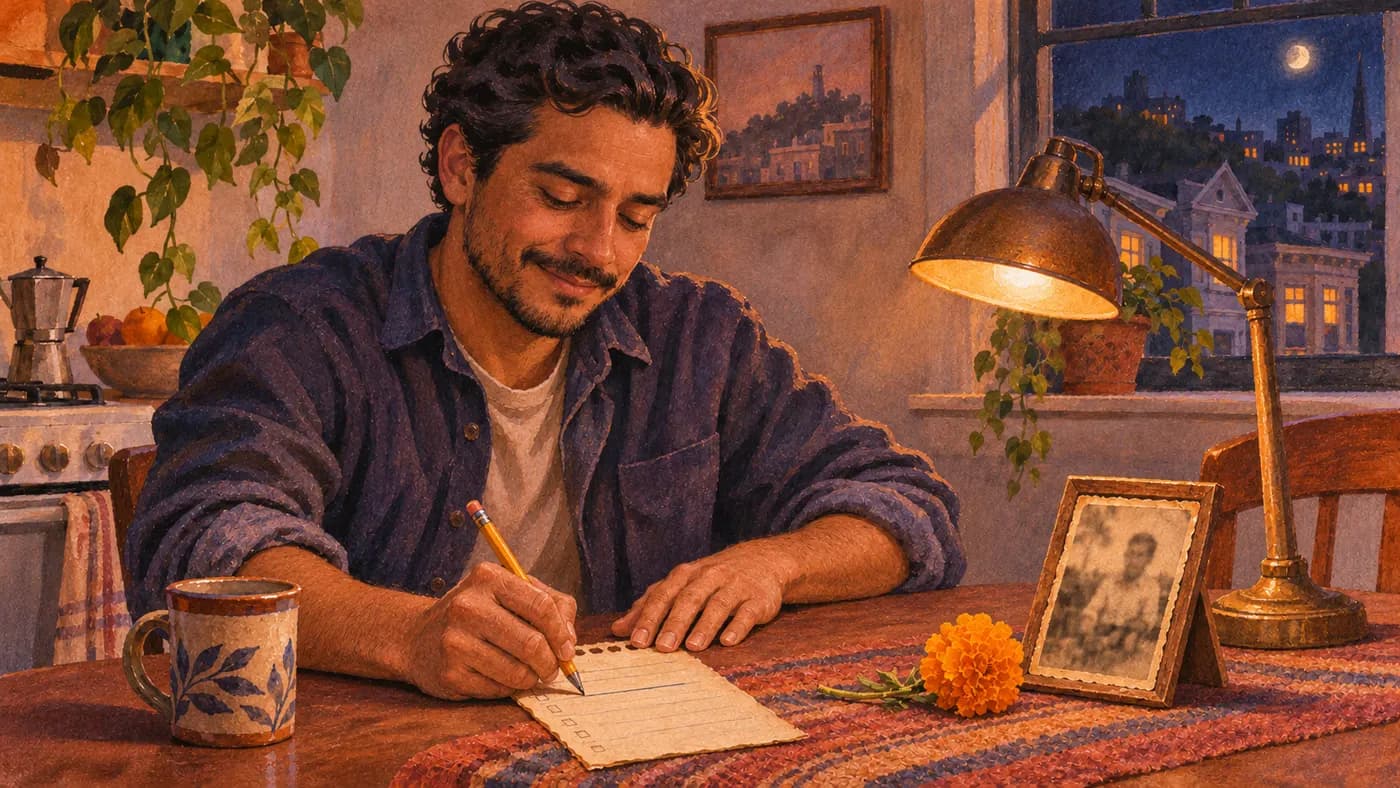
Later, at the kitchen table, he slipped the paper out again. The old list had a little room left below his father's last line. He took a pencil and wrote: ‘Call my brother.’
He did. They talked about the chipped mug and the way their father always bought too many tomatoes. Afterward, he tucked the list into the kitchen drawer. It no longer looked like something someone had forgotten to throw away.