Bay Area weekend
Small Bottles, Big Dreams
Inside a glass-roofed San Francisco hall, family vintners and independent makers placed years of risk on linen-covered tables and asked strangers to taste the future.
San Francisco has always understood the dramatic value of an entrance. It keeps its fog backstage, its hills arranged like scenery, and its grand old rooms hidden behind doors so sober that one expects either a bank president or a minor duke to emerge and ask whether one has an appointment.
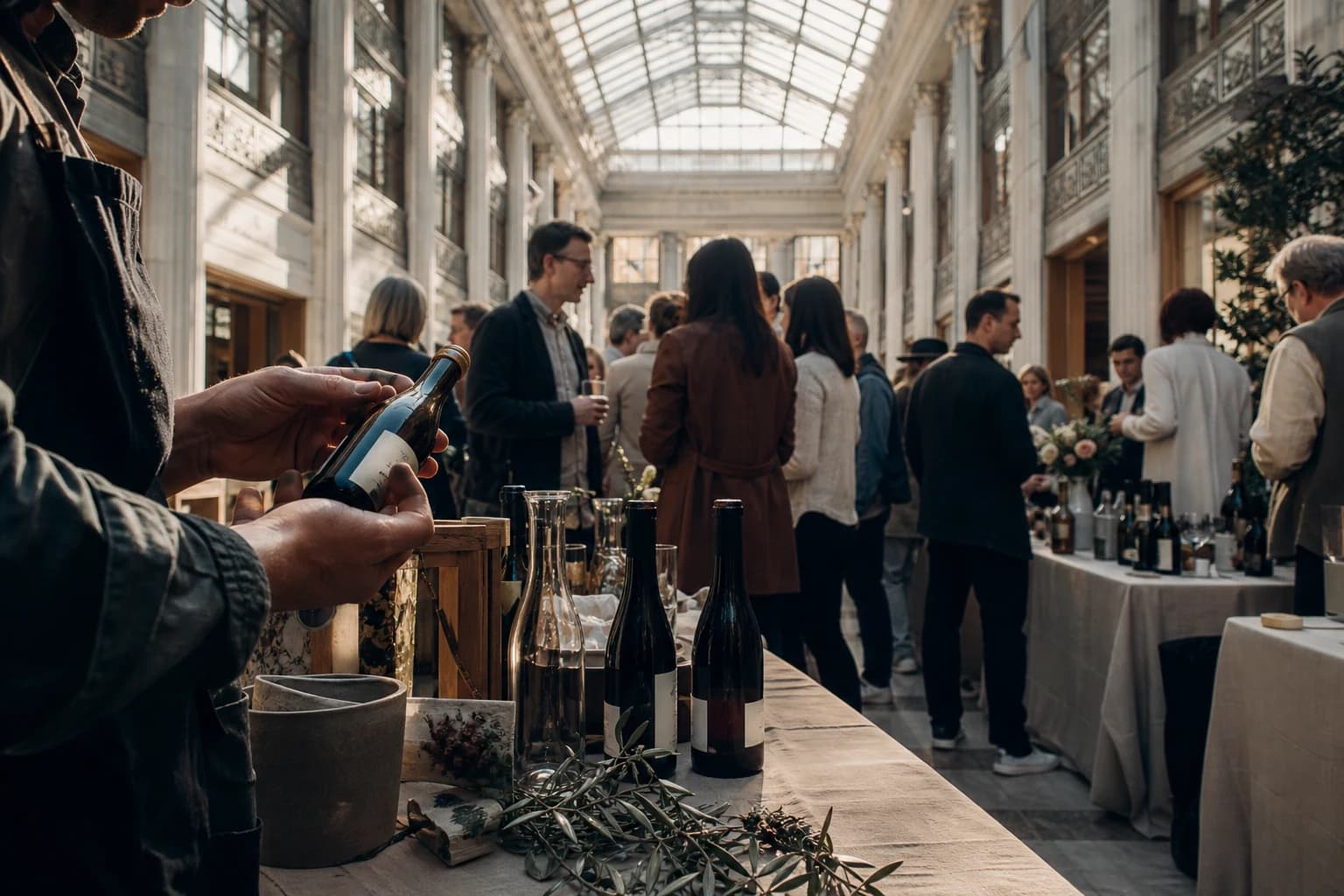
On Saturday, the doors at One Sansome opened instead upon Grapes & Goods: more than twenty-five family wineries, over a hundred artisans, and several hundred well-dressed citizens performing that most civilized of weekend rituals, the serious consideration of beautiful things they had not known they required until precisely that moment.
We arrived just after noon, beneath a sky the color of polished pewter, and stepped into The Conservatory, where daylight descended through the glass roof in pale theatrical columns and turned every bottle into stained glass, every brass fitting into an heirloom, every ordinary conversation into something that seemed, from ten paces away, to concern a marriage proposal or the fate of a republic.
It was, in short, an excellent room in which to have a dream, particularly if the dream could fit upon a six-foot table and survive five hours of strangers lifting it, smelling it, asking its price, and placing it back exactly half an inch from where they had found it.
A Table No Larger Than Hope
At the first wine table, a man with vineyard hands held a bottle as one might hold a difficult but beloved book. The label was restrained; the glass was dark; the quantity available was small enough to make abundance seem vulgar. He poured a measure no larger than a secret and waited.
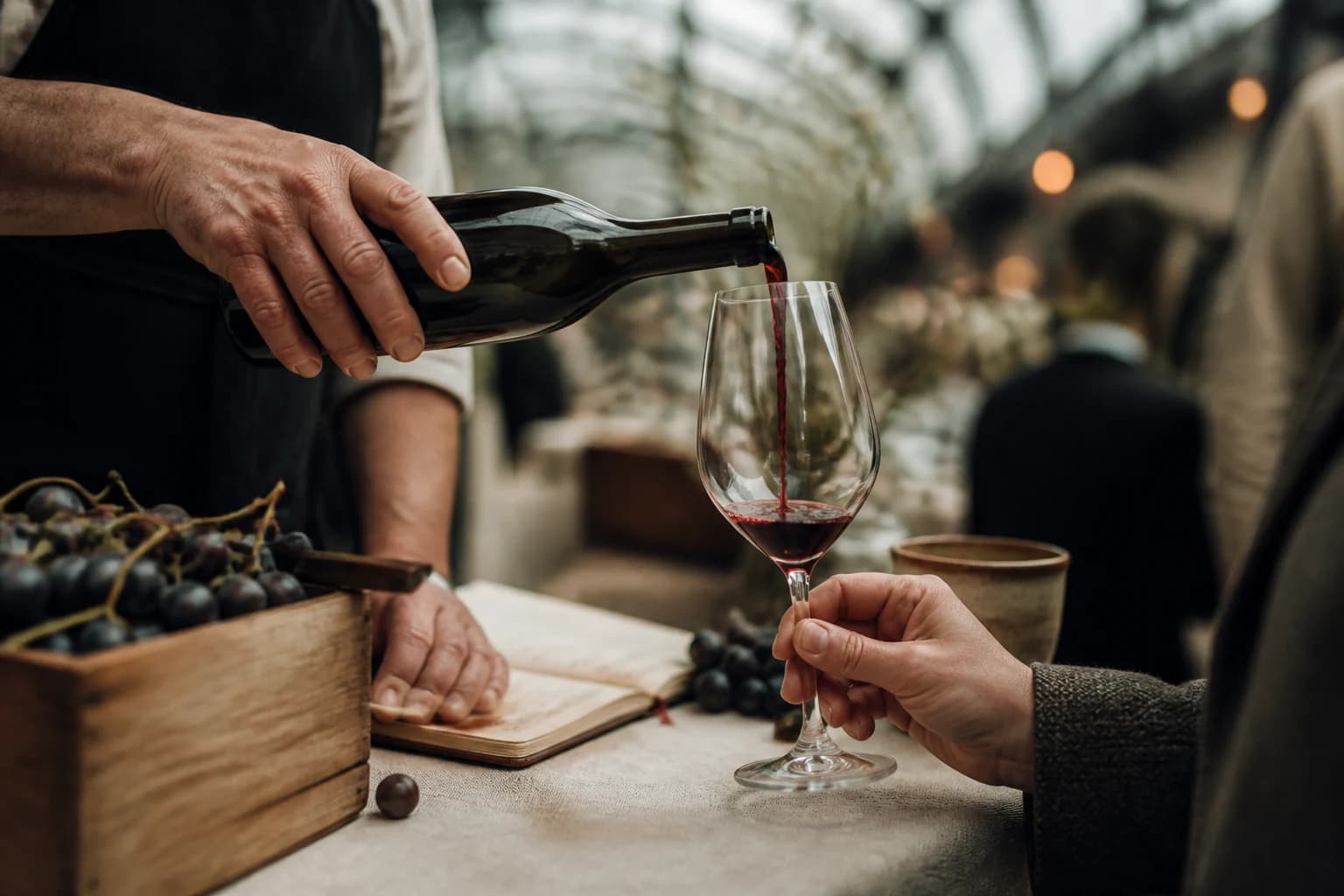
There is a silence particular to tasting wine in front of the person who made it. One may praise a chef after dinner, an architect after the building is finished, an author once the book has gone safely to print; but here the maker stands three feet away while the entire year enters your mouth: the wet winter, the unreasonable week in June, the birds that regarded netting as a philosophical suggestion, the machinery that failed on the only morning it was indispensable, the loan payment, the label printer, the harvest crew, the barrels, the doubt.
The wine was bright at first, then darker, with something like black cherry and something else we could not name without becoming ridiculous. The winemaker did not rescue us with vocabulary. He only watched, patient and unoffended, as though flavor were a room and he had opened the door but would not tell us where to stand.
Across the aisle, another vintner was explaining that her family produced only a few hundred cases. She said the number without self-pity and without boasting. It was simply the size of the wager.
Every Bottle Has Two Stories
Every bottle in the room carried two stories, though only one appeared on the label. The first was the lyrical one: hillside fog, old vines, patient hands, a hawk describing circles above some northern valley. The second was less often printed in gold foil: rent, freight, insurance, spoilage, glass costs, weather risk, distributor margins, and the astonishing price of persuading a bottle to travel from a quiet cellar to a civilized table without being lost, broken, cooked, delayed, or forgotten.
This second story did not diminish the first. It made it nobler. Beauty that requires no arithmetic is merely luck; beauty that survives a spreadsheet, a difficult season, and the cold attention of a stranger is a form of courage wearing good tailoring.
The room was full of people who knew this instinctively. They asked not only what they tasted but how long the vineyard had been in the family, why a particular grape had been chosen, whether the maker sold directly, how many bottles remained. These were not idle questions. They were small acts of recognition, a way of saying: I understand that the object before me did not arrive by enchantment, though enchantment may have been among its ingredients.
The Minor Gods of Useful Beauty
Wine may have possessed the title role, but the artisans were the play's sly and indispensable company: ceramicists, candle makers, jewelers, textile artists, olive-oil producers, stationers, and designers of objects whose chief practical function was to rescue a room from indifference.
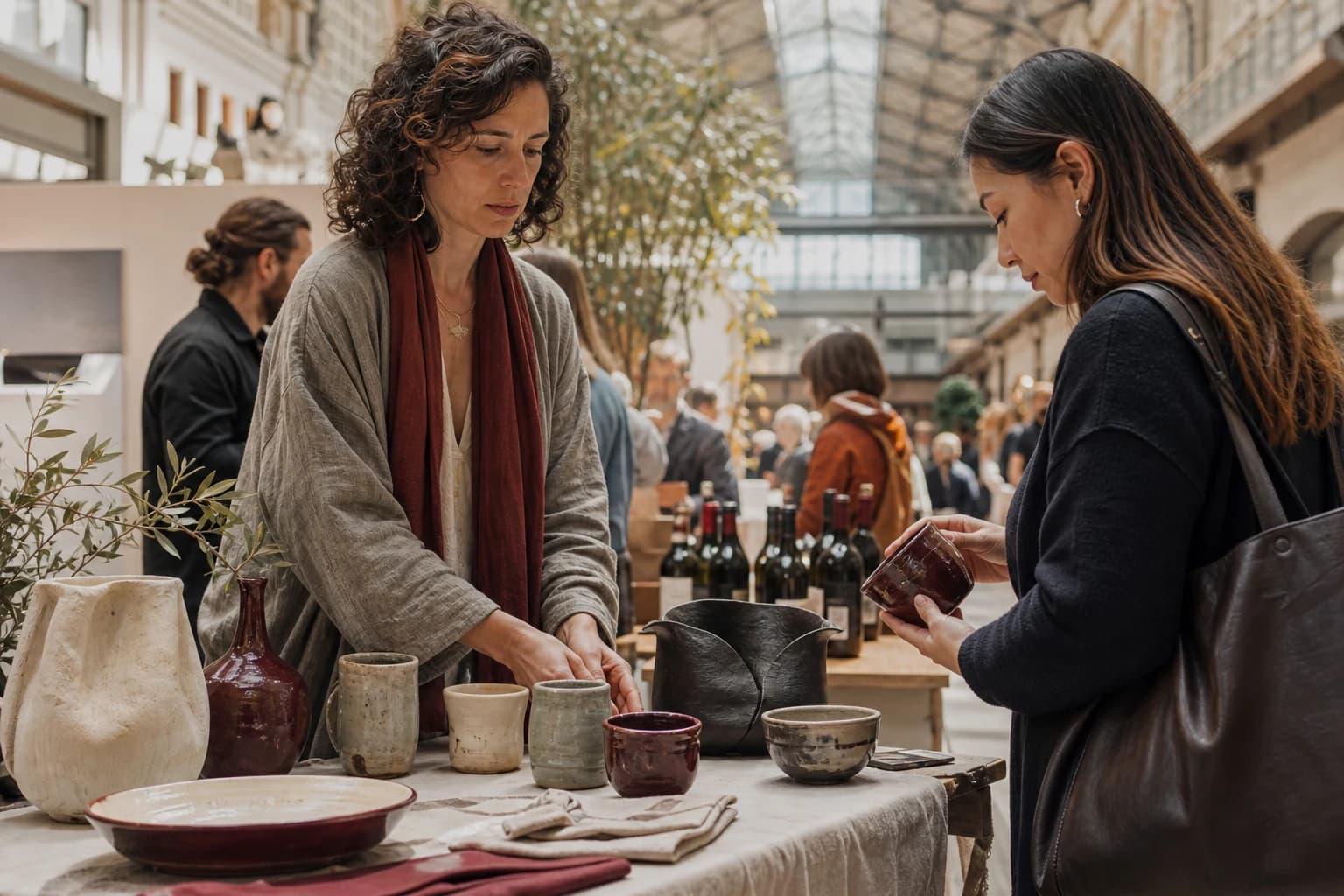
At one table, a ceramic artist arranged cups that refused the tyranny of perfect circles. Their rims wandered slightly; their glazes pooled and thinned like weather; one deep red cup held the color of a stage curtain one second before the tragedy begins. A woman picked it up, turned it in both hands, put it down, walked away, returned, and picked it up again. Commerce has invented many complicated funnels, but desire still prefers choreography.
The maker watched this courtship with disciplined calm. To create an object is one act of nerve; to price it is another; to stand beside it while someone decides whether your labor belongs in her home requires the composure of a diplomat and the concealed heartbeat of a gambler.
Eventually the cup was wrapped in tissue. The buyer smiled as though she had won something; the maker smiled as though she had been chosen. Both were correct.
On Taste, and Other Forms of Courage
Taste is often mistaken for a talent bestowed at birth upon those who own the correct glasses. In practice, it is closer to attention. It is the willingness to notice that one linen is softer but another will age better; that one wine announces itself brilliantly while another waits at the edge of the conversation; that the most expensive object in the room may have less character than a small bowl carrying the thumbprint of the person who made it.
Good taste is not the worship of cost. It is discrimination without cruelty, pleasure without panic, and the confidence to leave a celebrated thing untouched because an obscure one spoke more clearly. The market was elegant not because everyone agreed, but because disagreement was allowed to remain graceful.
We tasted a pale wine that seemed at first almost too quiet. Five minutes later, while examining hand-bound notebooks, we were still discussing it. This, I decided, is one definition of quality: the thing departs, yet continues to occupy the room.
A Seminar on Weather, Debt, and Faith
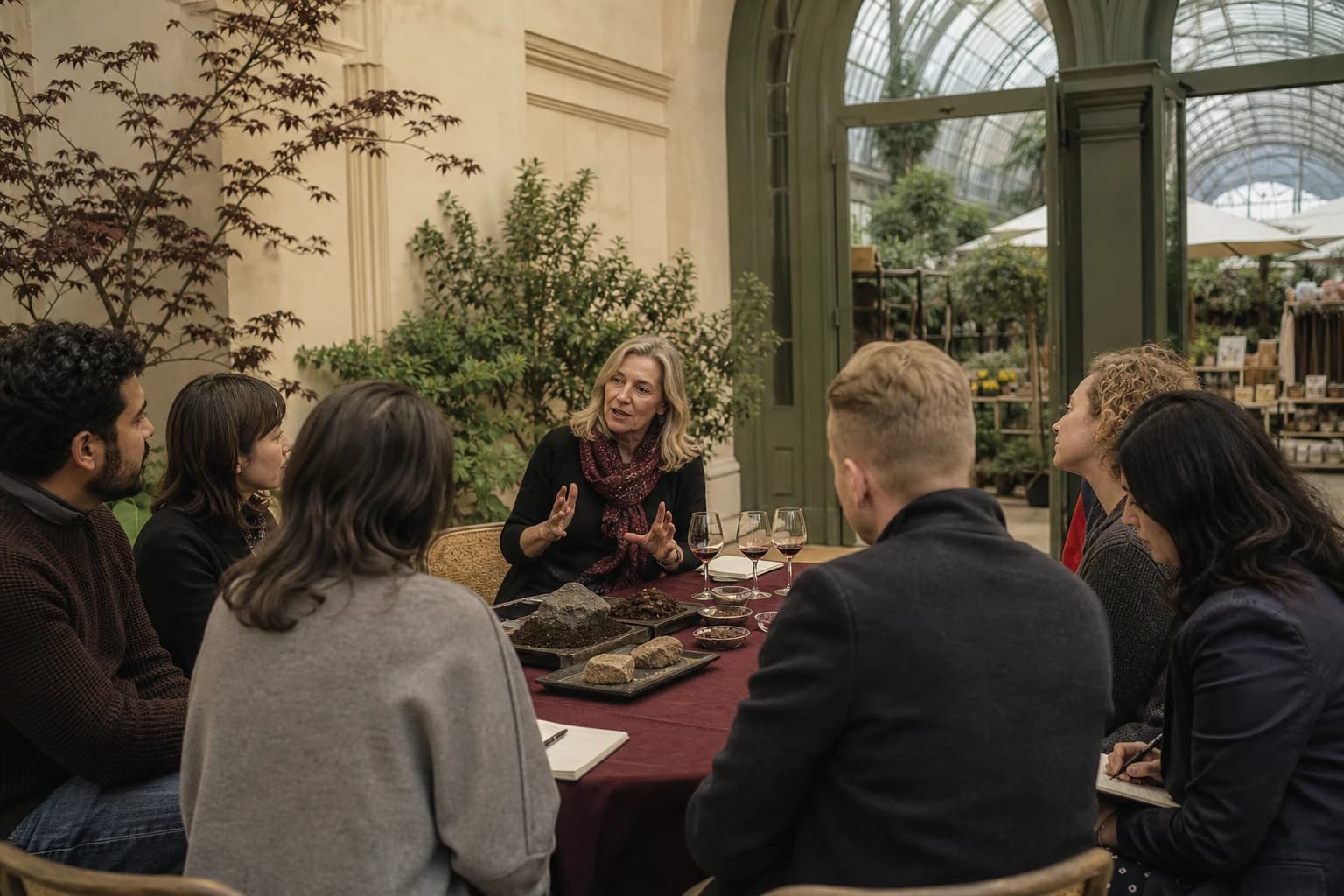
In a side gallery, a vintner had arranged three glasses beside shallow trays of vineyard soil: pale gravel, dark loam, a rust-colored earth that looked capable of remembering empires. A small audience gathered, notebooks open, and she began not with tasting notes but with rain.
She spoke of seasons as a dramatist speaks of kings: generous, vain, treacherous, occasionally redeemed in the final act. Too much rain at the wrong hour, too little when the roots are searching, heat arriving like an army before the fruit has prepared its defenses. Farming, she suggested, was the art of making decisions in May whose wisdom would not be known until October, and then placing the result in barrels so that judgment might be postponed another year.
Nobody mentioned entrepreneurship, yet it sat at the table with us. Here was its oldest form: capital buried in soil, labor exposed to weather, inventory asleep in wood, and faith compounded quietly while the rest of the world refreshed a dashboard.
A guest asked when she knew a vintage would be good. The vintner smiled with the patience of someone who had been asked to reveal the third act before the interval. 'Later than we would like,' she said.
That answer belonged not only to wine. It belonged to every honest undertaking in the hall.
The Bottle We Chose
By late afternoon, the room had softened. Early ambition had given way to the gentler exhaustion of people who had told their story fifty times and still meant it. Tissue paper whispered. Card readers chimed. Empty places appeared on shelves, little rectangular absences where hope had converted, by the ancient miracle of agreement, into revenue.
We returned to the first table. The bottle was still there, though fewer of its companions remained. We bought one, not because it had conquered every rival in a tournament of the palate, but because we remembered the silence after the pour and the maker's refusal to tell us what we ought to taste.
Beside it went the red ceramic cup, wrapped with the care normally reserved for diplomatic treaties and very small cakes. Our purchases were modest. This was fortunate; the grandest dreams are often safest when carried home in a paper bag.
What the Glass Roof Held
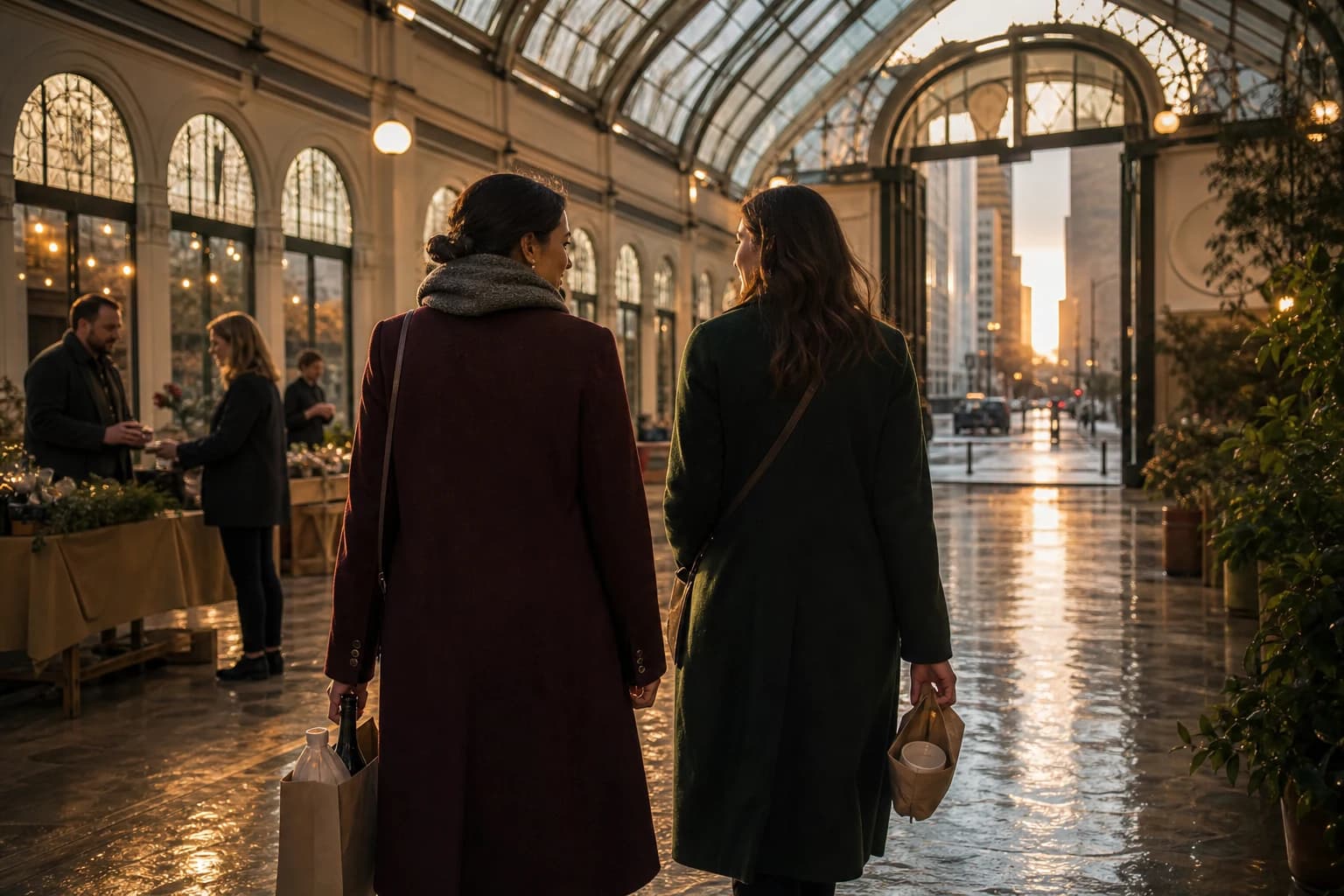
When we left, a brief rain had polished the Financial District and the low sun was turning every wet surface into a declaration. Behind us, makers folded linen, counted bottles, compared notes, and began the private arithmetic by which a day becomes worthwhile: sales against fees, new customers against sore feet, possibility against fatigue.
The Conservatory glowed like a lantern, and for a moment all those small enterprises remained visible beneath its glass: not small because their ambitions were modest, but because smallness was the chosen scale at which judgment, touch, and character could still survive.
A bottle is a curious vessel for a dream. It is dark so the light cannot damage what waits inside; narrow so it may be held; fragile so it must be carried with attention; sealed because some transformations require privacy. Then one evening it is opened, poured among friends, and vanishes by becoming part of the occasion for which it had been waiting.
We walked into the golden street carrying one bottle and one cup, while behind us a hundred larger hopes were packed into boxes. The city, which has launched fortunes from garages, laboratories, kitchens, and borrowed desks, had made room for one more kind of ambition: a table under glass, a stranger pausing, a hand reaching out, and the brave little question beneath every beautiful thing offered for sale.
Will you take this home?