Science fiction · an imagined future
A Home Beneath Martian Skies
A one-way Starship ticket, a blue mug, and the adventure of building a life on another world.
A ticket with no return
The ticket had only one destination: MARS. No return date, no little box for a connecting flight. David turned it over anyway, as though the other side might explain what a person was supposed to feel when leaving the only planet he had ever known.
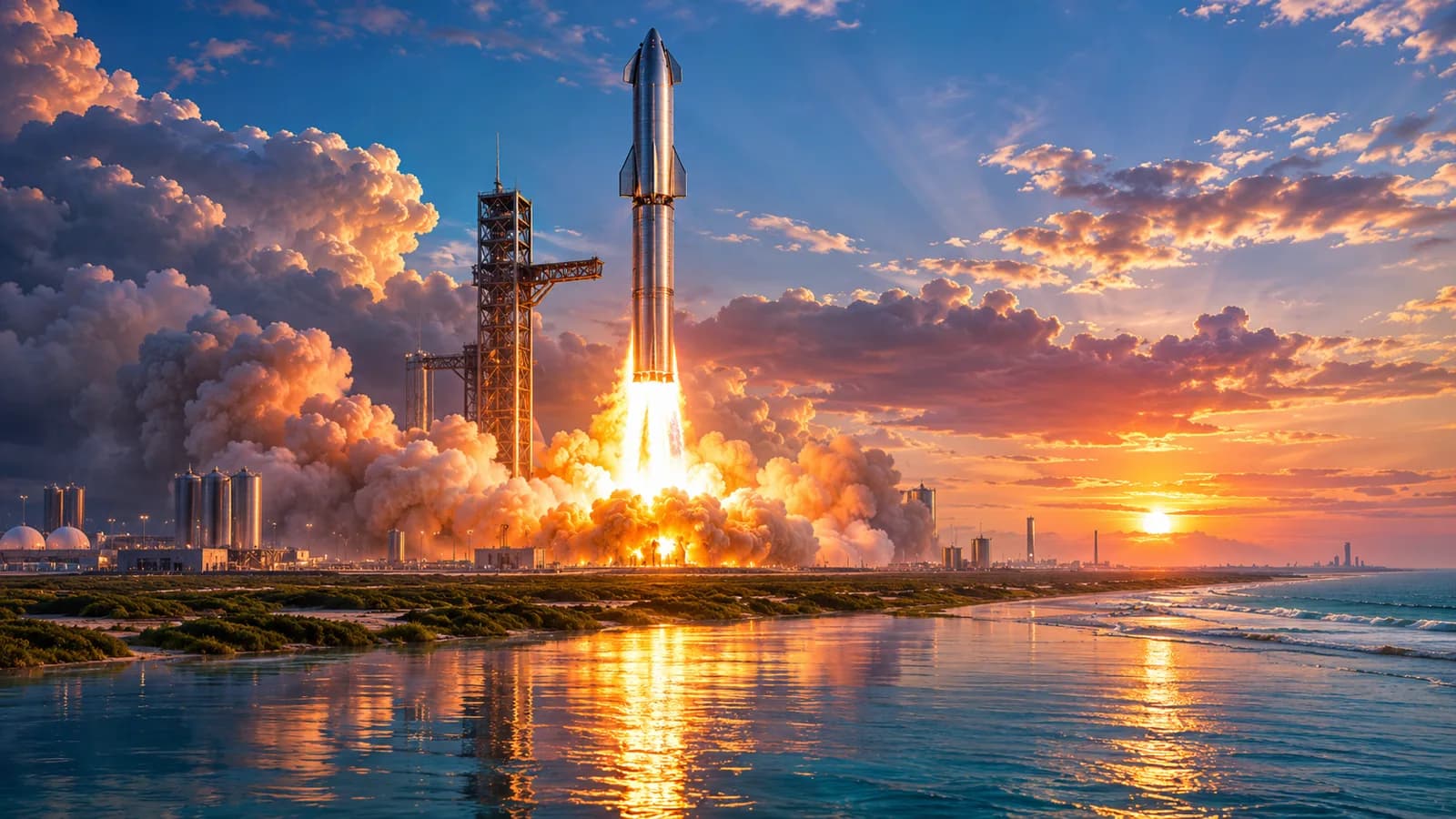
The launch tower rose over the coast like a second skyline. Beneath the silver Starship, the booster waited in the morning light. Somewhere beyond the windows, Earth was carrying on with its ordinary miracles: coffee brewing, children arguing over breakfast, a dog insisting on one more walk. He had loved those things. He was carrying them with him, though his luggage was mostly seeds, photographs, and a blue mug wrapped in a sweater.
This is a work of imaginative science fiction, inspired by SpaceX's Starship concept. Its voyage, passengers, technology, Martian settlement, and events are invented.
The blue world gets smaller
When the engines ignited, the whole ship seemed to gather its courage. The sound arrived as a force before it became a noise. Then the tower slipped down past the window, the ocean opened beneath them, and the sky deepened from blue to a color David had never needed a name for.
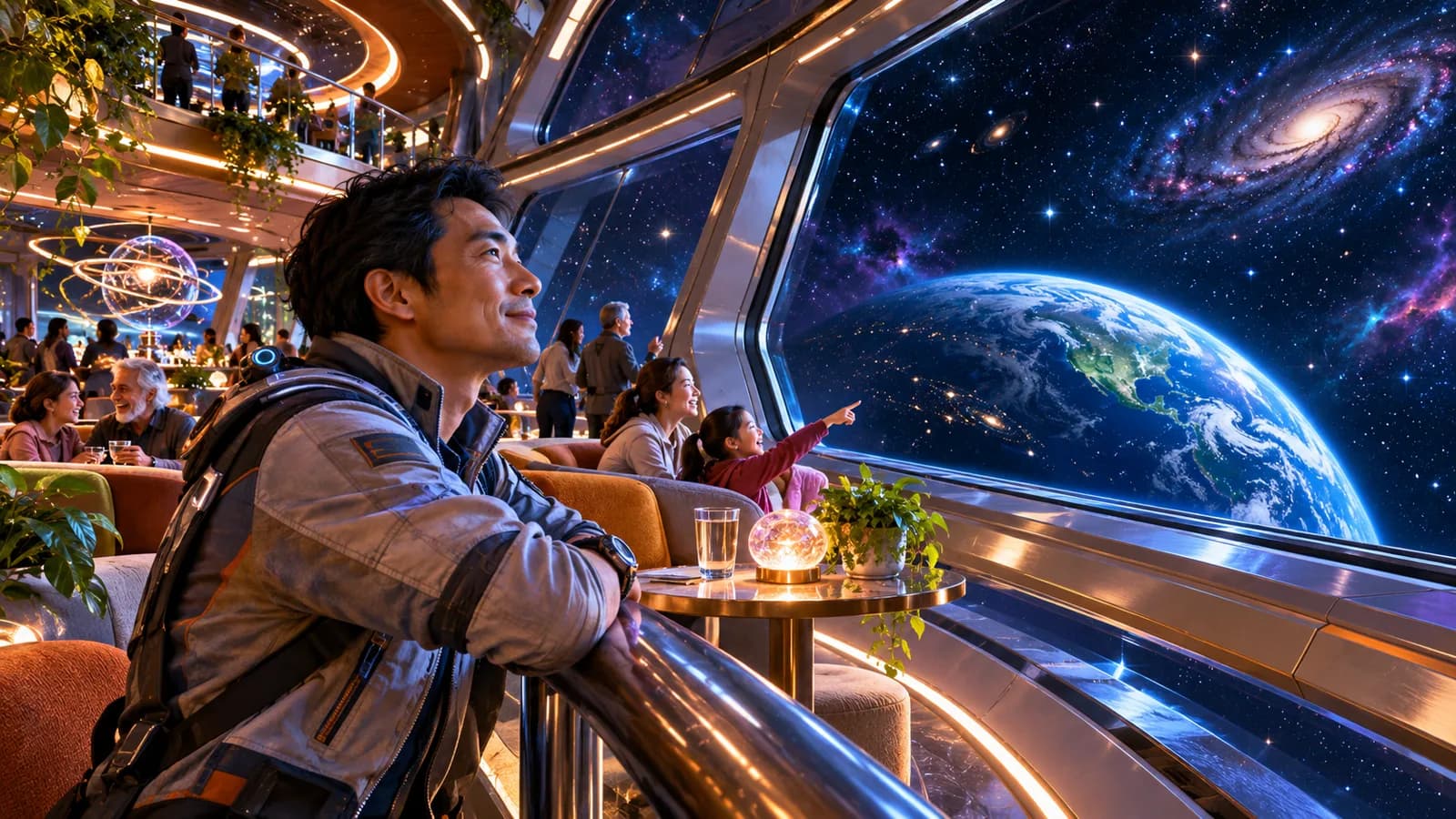
After the great push and the careful work of setting their course, the days became wonderfully strange. A drop of tea escaped a cup and hovered like a tiny amber planet. Children learned to chase it without sending three more drops into orbit. In the observation lounge, strangers traded stories while Earth shone beyond the glass.
David met Amara, a botanist who talked to seedlings, and Luis, an engineer who repaired everything except his own terrible jokes. Each passenger carried a different reason for coming. They shared the same impossible view: the world behind them growing smaller, and the space ahead growing full of possibility.
On the longest nights David looked for home and found a blue light. He did not stop missing Earth. He began to understand that missing a place was another way of keeping it close.
A world the color of sunrise
Mars appeared first as a bright point, then a copper coin, then a world large enough to fill the window. Its valleys stretched beyond the horizon. Mountains rose out of red dust as if someone had built them for giants and then left the door open for everyone else.
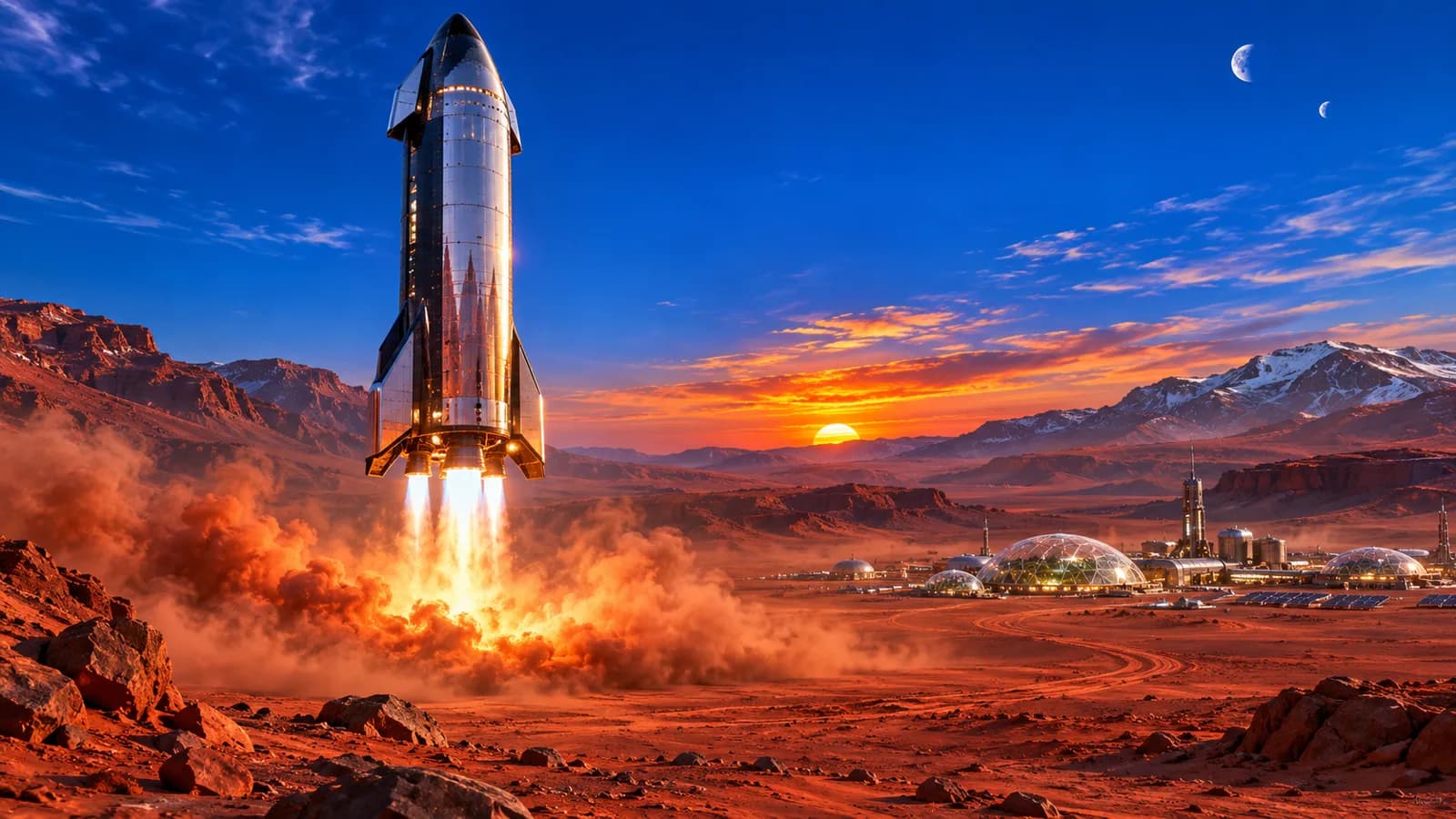
The descent was an orchestration of fire and nerve. Starship turned, its engines flared, and a cloud of rust-colored dust rolled across the landing plain. For a moment nobody spoke. Then the landing legs settled, the cabin shivered, and someone laughed so hard that the whole room followed.
Outside, their first steps were careful. Inside his helmet David could hear his own breathing. The sky was a pale unfamiliar gold, and the ground under his boots had waited a very long time for this particular footprint. He wanted to say something historic. Instead he said, ‘We made it.’ Amara answered, ‘Now comes the gardening.’
The first spring under glass
The first years were not a postcard. Air, water, shelter, food: every ordinary comfort had to be made, measured, repaired, and made again. When a pump failed, everyone learned its name. When a harvest was small, dinner became a lesson in sharing. Messages from Earth took time to cross the distance, and sometimes David wished he could borrow a few ordinary minutes from home.
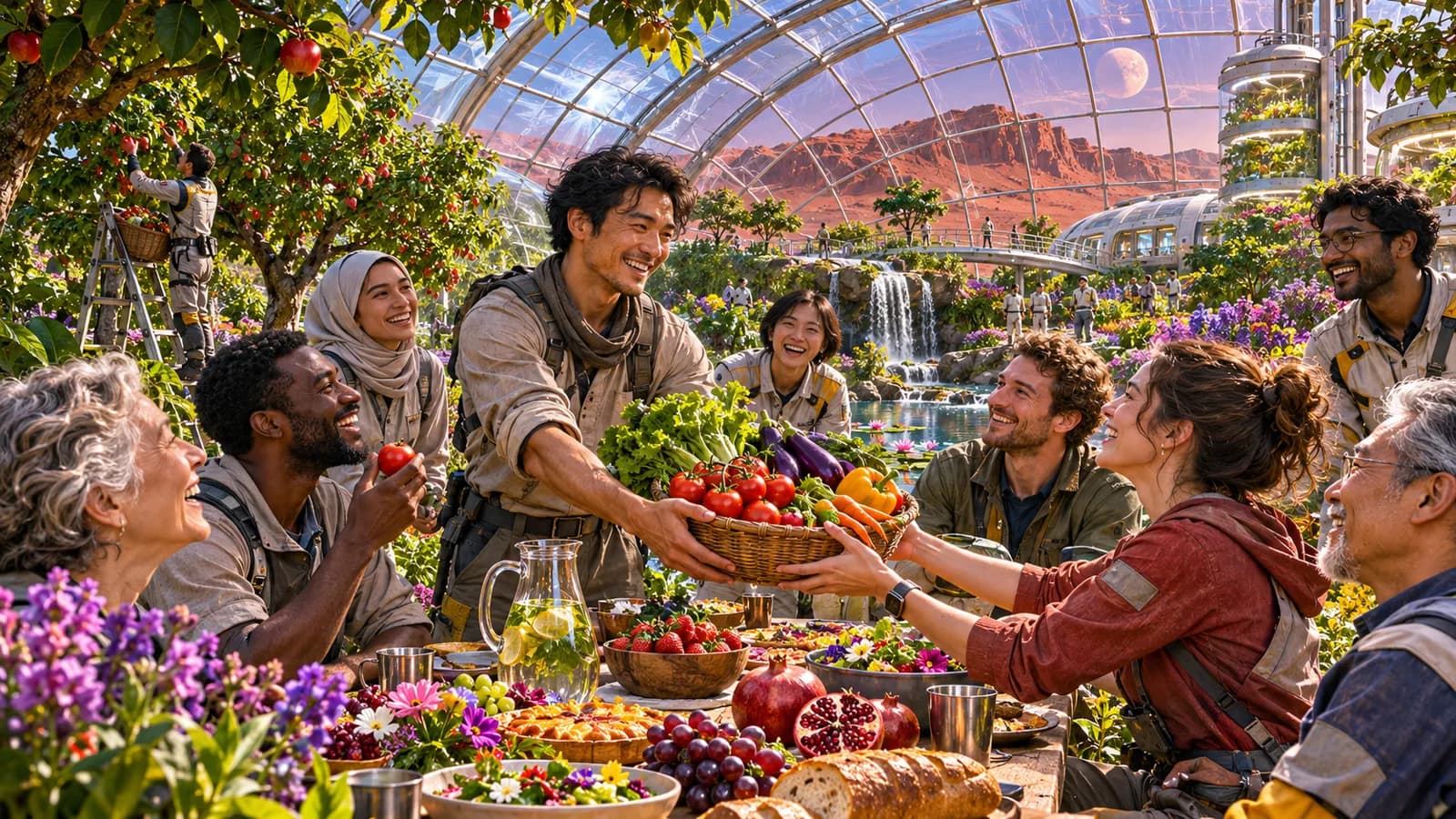
But the settlement grew. Robots traced new roads through the dust; engineers built bright domes connected by sheltered streets. Amara coaxed a green canopy from patient rows of seedlings. David helped build a greenhouse where the first tomato ripened beside a window facing a red mountain.
They held a feast for it. One tomato, sliced thin enough for everyone to taste, became the most celebrated fruit on two planets. Luis announced it had a slightly astronomical price. Nobody laughed at first; then everybody did.
With time came libraries, music, workshops, playgrounds, and a little café where David's blue mug found a place on the shelf. Children born on Mars drew Earth as a blue star and asked their elders what rain sounded like on a roof. He told them. They taught him the names of the winds that swept the plains.
A home with two skies
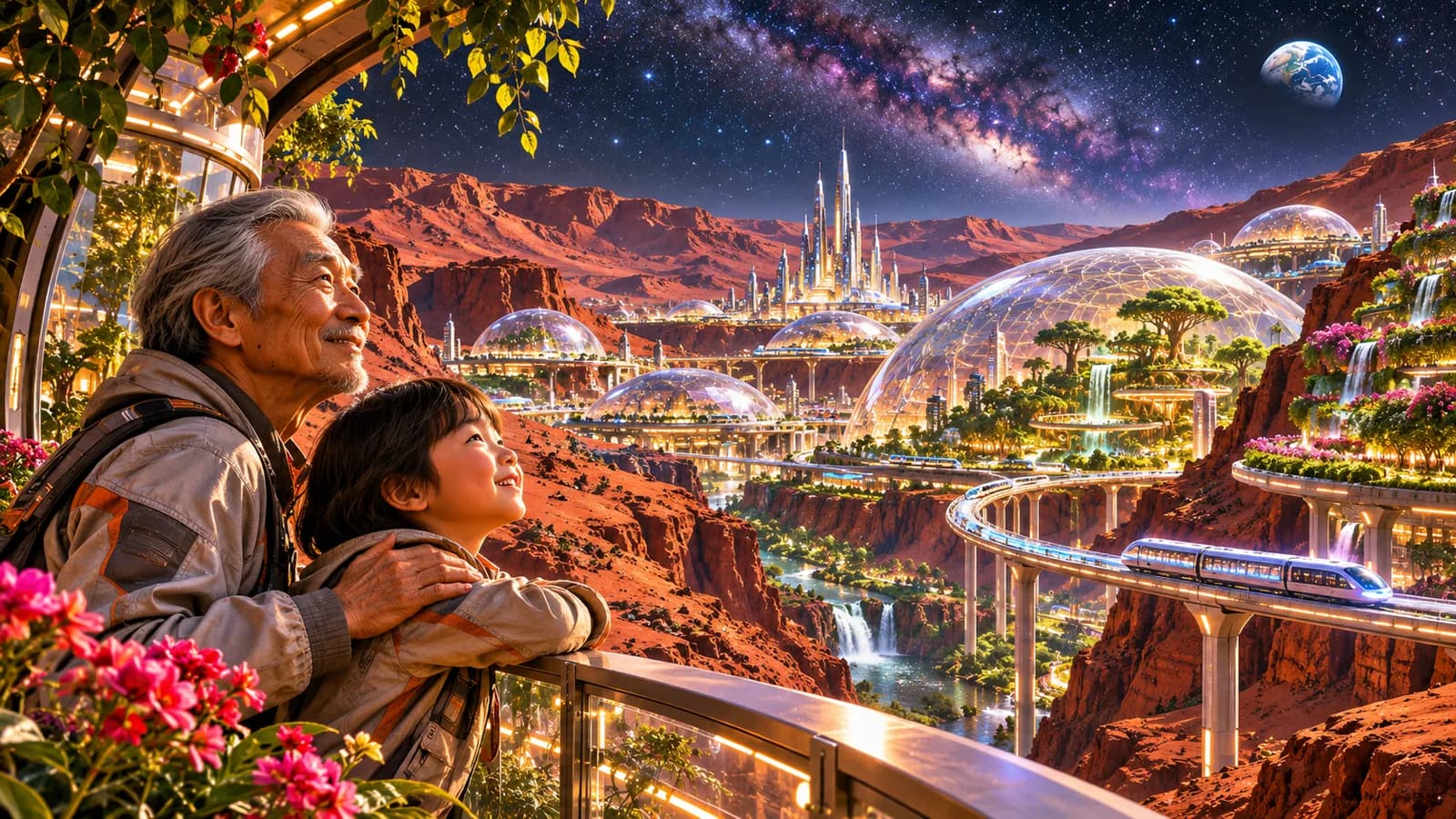
Years became decades. The settlement grew into a city of gardens beneath glass and lights strung across sheltered avenues. Beyond it, explorers mapped canyons and built observatories where children could watch the moons race over the horizon. The frontier did not become easy; it became familiar, because people kept showing up for one another.
One evening David stood with his granddaughter above the city. Below them the domes shone like lanterns scattered across the red earth. She pointed to a small bright star and asked whether that was where he had come from.
‘Yes,’ he said. ‘And this is where we are.’ She slipped her hand into his. They watched the lights come on, one by one, until the city looked like a piece of the night sky had chosen to settle on Mars.
He had boarded a ship with a ticket that had no return. He had not lost the world he loved. He had helped make room for another one.